Storm-proof power supply on the Northern Beaches: protecting your connection before the next big blow
Practical steps Northern Beaches owners can take to make the supply to their home more resistant to storms, from tree clearance and bracket checks to undergrounding.
Every few years an east coast low or a violent southerly change rips across the Northern Beaches and leaves streets of homes without power. Some of those outages are on the street network, and Ausgrid restores them. Many others are on the owner’s side: a service line torn down by a falling limb, a bracket ripped off a wall, a private pole snapped on a slope, a meter box full of water. Those take longer, because they need a Level 2 electrician and the parts on hand. A storm-proof power supply won’t stop the wind, but it can make your connection much less likely to fail when it blows.
Know how you’re supplied
Start by understanding your connection:
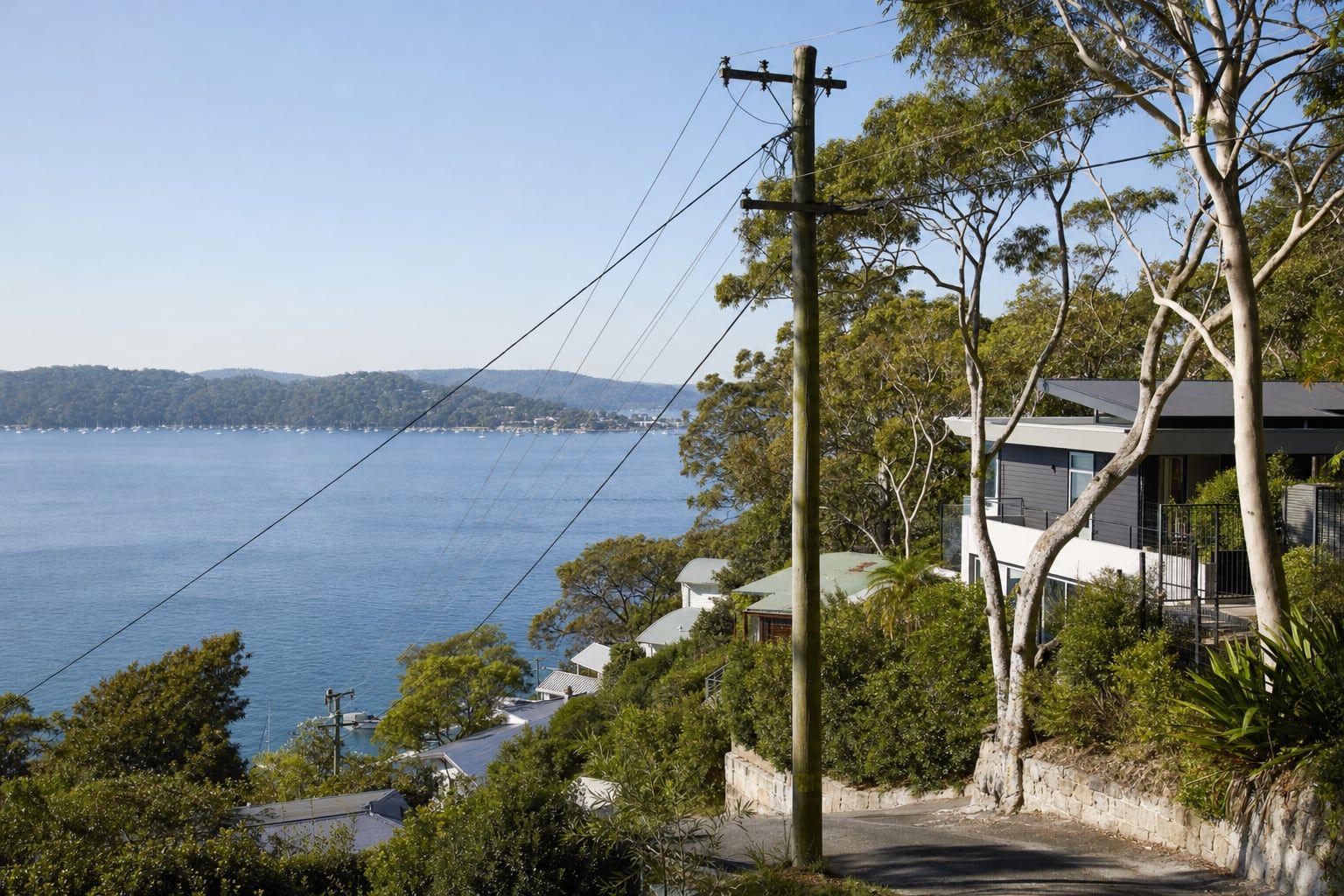
- Overhead from the street. A wire runs from a street pole to a bracket or roof raiser on your house.
- Overhead via private poles. The wire crosses your land on one or more private poles before reaching the house.
- Underground. Cable runs in conduit from a pole or pit to your meter. There’s no wire to the house.
Overhead connections, especially long ones through trees, are the most exposed.
Trees: the number one cause
On the beaches, trees bring down more service lines than anything else. Spotted gums and angophoras shed big limbs without warning, palms drop heavy fronds, and Norfolk pines snap in high winds.
- Look at what’s above and beside your service line.
- Have an arborist assess trees whose limbs overhang it.
- Book an isolation so pruning can be done safely near the line.
- Don’t plant fast-growing trees under the line.
Council tree rules apply across the peninsula, so check before removing or heavily pruning a tree.
Brackets and raisers
The point of attachment holds the line’s full tension in a storm. A corroded or poorly fixed bracket is a common failure point. Look for rust, cracked render or brickwork around the fixings, a bracket that has pulled away, or a raiser that’s bent or rusted at the roof. Replacing a weak fitting with a galvanised one through a point of attachment upgrade is a small job that prevents a big one.
Meter boxes
Driving rain gets into tired meter boxes. Check that the door closes and seals, that there’s no rust through the enclosure and that conduit entries are sealed. Never open the box to look inside.
Private poles
If your supply crosses private poles, those poles are your responsibility and often the weakest point in a storm. Have older poles inspected, replace any that are rotten or leaning, and keep the line corridor clear. Our private power pole responsibility guide covers it in detail, and private power pole replacement explains the options.
Flood-prone streets
Streets around Narrabeen Lagoon, Manly Lagoon, Dee Why Lagoon and low parts of Mona Vale and Brookvale flood in heavy rain. If your meter box is low, water can reach it. When rebuilding or renovating, ask about raising the meter position. After any flood, have the supply checked before using it.
Taking it underground
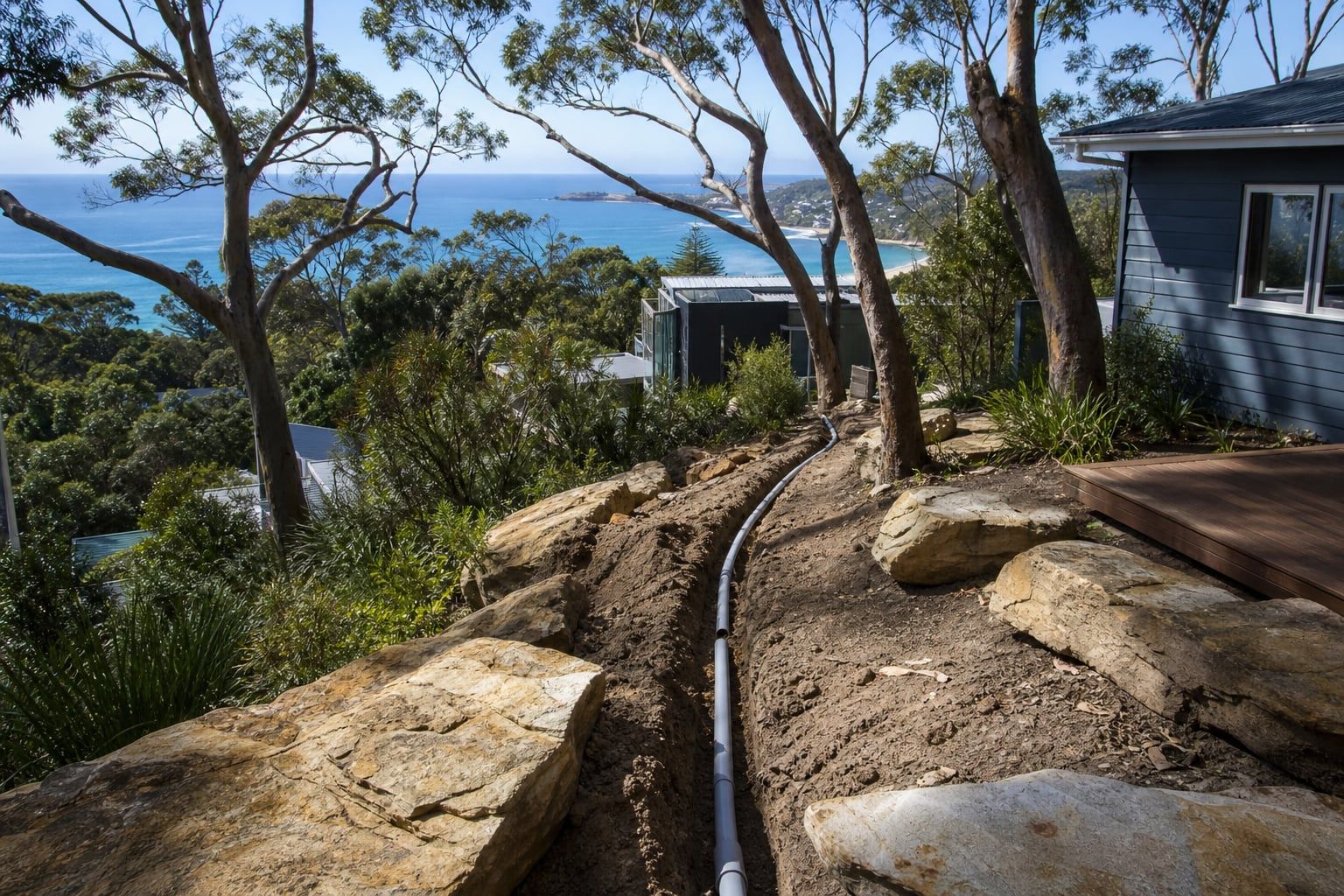
The most complete way to storm-proof a supply is an overhead to underground conversion. With the cable in conduit underground, there’s no line for limbs to hit, no bracket to rip off, and no private pole to fall. It’s a bigger investment, but on exposed or bushy blocks it’s often worth it, and it can be combined with a renovation, pool or driveway project to reduce costs.
Before a big storm
When a major storm is forecast:
- Secure loose outdoor items that could blow into lines
- Know where your main switch is
- Keep a torch and charged phone handy
- Keep emergency numbers somewhere easy: Ausgrid 13 13 88 for street wires, us for your line and private poles, 000 in an emergency
When a line comes down
Stay at least eight metres from any fallen wire and treat it as live. Keep everyone back. Don’t try to move branches. If the wire is a street line, call Ausgrid. If it’s the line to your house, your bracket or a private pole, call our emergency level 2 electrician team.
After the storm
From a safe distance, look at the line, bracket, raiser, any private poles and the meter box. If anything has moved, is hanging lower, is damaged or has water in it, book a check.
Strata and shared supplies
Apartment buildings in Manly, Dee Why and Collaroy have shared main supplies. Strata committees should include the main service, meter enclosures and any overhead connections in their maintenance planning.
Insurance and records
Keep certificates and reports for supply work and pole inspections. After storm damage, we can provide a written report with photos for your insurer.
Where storms hit hardest
Exposed headlands and bushy slopes take the worst of it: level 2 electricians Palm Beach, Avalon, Newport and the Pittwater escarpment, plus beachfront streets in level 2 electricians Collaroy and Narrabeen.
Get advice
Call the level 2 electricians Northern Beaches team for a supply check, or send photos of your line, bracket and any private poles.
Updated
Storm-proof power supply on the Northern Beaches: common questions
Something else on your mind? Call 02 9158 9937 and ask.
What's the single best way to protect our supply from storms?
Taking the service underground removes the overhead line, which is the part most often damaged.
Can I trim branches near the service line myself?
No. Work near live lines needs the supply isolated or specialist crews. Book an isolation and use a qualified arborist.
Should we check our supply after every storm?
Have a look from a safe distance after big storms. If anything has moved, is hanging lower or looks damaged, call us.